Sacred Heart Parish in Norfolk is gearing up its annual celebration to observe the feast day of Our Lady of Guadalupe.
The feast day — which is officially on Tuesday, Dec. 12, but will be celebrated on Sunday, Dec. 8, in Norfolk — commemorates the Virgin Mary’s appearances to Juan Diego, an indigenous Mexican peasant. The first of which occurred in December 1531 on the Hill of Tepeyac in Mexico.
Pat Sulu, a Hispanic ministry volunteer for Sacred Heart, said the celebration of Our Lady of Guadalupe isn’t an act of worshiping Mary but a way to acknowledge her role in Jesus’ life and the life of the church.
“We don’t pray to Mary — we honor her because she is the mother of Jesus and ask her to pray for us,” Sulu said.
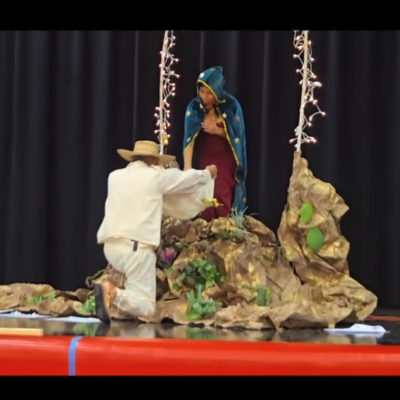
In the story of Our Lady of Guadalupe, Mary’s appearance was to show that everyone is worthy of God’s love. Juan Diego was only a boy on his way to Mass when he met an Aztec woman who spoke the Nahuatl language and was dressed in a blue robe with stars. She identified herself as the Virgin Mary — “mother of the very true deity” — and asked for a church to be erected on the site as a sign to the people that she loves them and is praying for them.
When Juan Diego relayed his message the archbishop of Mexico City, the archbishop did not believe him. He told the boy the mother of Jesus would be more likely to appear to someone more important than a peasant.
The story culminates with Mary making more appearances to Juan Diego and one to his uncle, Juan Bernardino, and her instructing him to gather flowers from the top of Tepeyac Hill, which is normally barren, and take them to the archbishop.
Juan Diego found Castilian roses — not native to Mexico — blooming at the top of the hill. Mary arranged the flowers in Juan Diego’s tilma (cloak), but when he opened the cloak before the archbishop, the flowers fell to the floor, revealing an image of the Virgin of Guadalupe on the fabric.
Sulu said the story of Juan Diego and the appearance of the Virgin Mary is documented in the Nican Mopohua, which was written only nine years after the event. According to the University of Dayton, Ohio, it is the first and oldest written source on Our Lady of Guadalupe.
Sulu said it is thought that the archbishop — who didn’t speak the Aztec language — didn’t understand Juan Bernardino, who said Mary wanted to be known as Coatlaxopeuh, which means “one who crushes the serpent” and is pronounced similar to “Guadalupe.” The serpent was the principal god of the Aztec people at the time.
Nearly 500 years later, Juan Diego’s tilma still hangs in the Basilica of Our Lady of Guadalupe in Mexico City, and the feast day commemorating the event in Norfolk will include a novena prayer that will begin on Monday, Dec. 2.
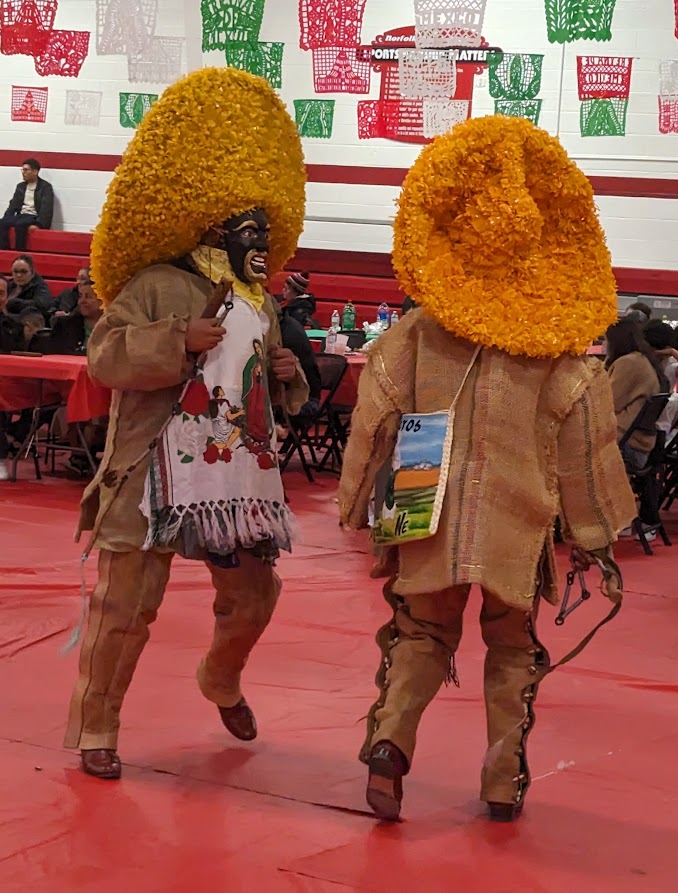
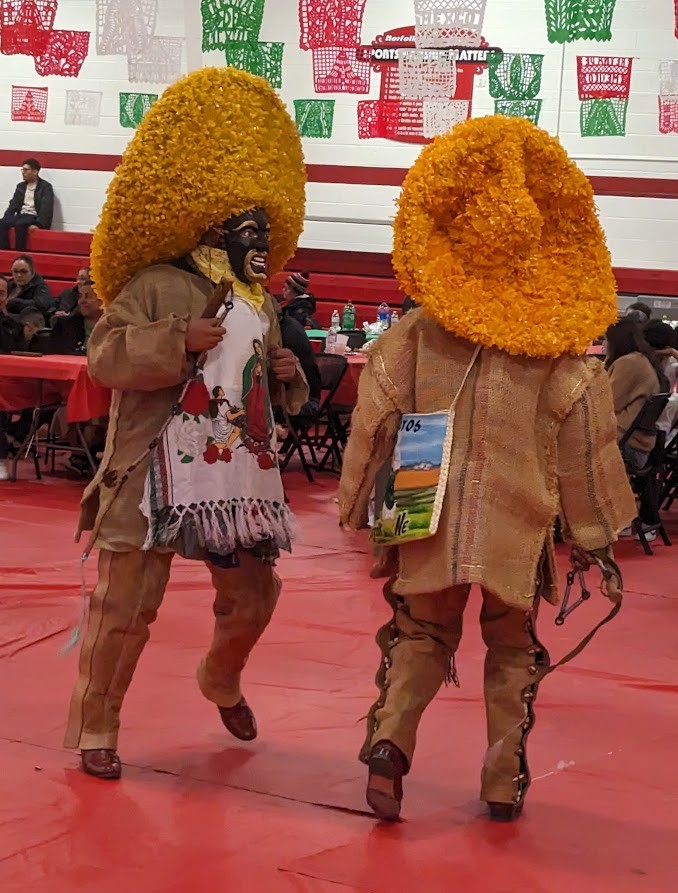
On Sunday, Dec. 8, the celebration will begin with a rosary and mañanitas — songs of Mary — at 5 a.m. at St. Mary’s Church. Breakfast will be served from 6 to 7 a.m. in Sacred Heart Parish Center. Photos with the Our Lady statue will take place before the 11:30 a.m. bilingual Mass at St. Mary’s. After Mass, there will be a procession to Burns Gym, where there will be food, dancing and music throughout the afternoon.
The celebration is open to the public.
Nuestra Señora de Guadalupe
 La Parroquia del Sagrado Corazón en Norfolk está preparando su celebración anual para observar la fiesta de Nuestra Señora de Guadalupe.
La fiesta, que es oficialmente el martes 12 de diciembre, pero se celebrará el Domingo, 8 de diciembre en Norfolk: conmemora las apariciones de la Virgen María a Juan Diego, un campesino indígena mexicano. La primera de las aparaciones ocurrió en diciembre de 1531en el Cerro del Tepeyac en México.
Pat Sulú, voluntaria del ministerio hispano del Sagrado Corazón, dijo que la celebración de Nuestra Virgen de Guadalupe no es un acto de oración a María sino una forma de veneración y reconocer su papel en la vida de Jesús y la vida de la iglesia. “No rezamos a María, la honramos porque es la madre de Jesús y le pedimos a ella para que ore por nosotros”, dijo Sulú.
En la historia de Nuestra Señora de Guadalupe, la aparición de María fue para mostrar que todos son digno del amor de Dios. Juan Diego iba camino a misa cuando se encontró con una mujer azteca que hablaba la lengua nativa náhuatl y vestía una túnica azul con estrellas. Ella se identificó como la Virgen María – “madre de la verdadera deidad” – y pidió que se construyera una iglesia en el lugar como señal a la gente de que ella los ama y está orando por ellos.
Cuando Juan Diego transmitió su mensaje al arzobispo de la Ciudad de México, el arzobispo no le creyó. Le dijo al indio que sería más probable que apareciera la madre de Jesús a alguien más importante que un campesino.
La historia culmina con María haciéndole más apariciones a Juan Diego y una a su
Tío, Juan Bernardino. Ella le indicó que recogiera flores de lo alto de Cerro Tepeyac, que normalmente es árido, y llévarlos al arzobispo. Juan Diego encontró rosas castellanas, no nativas de México, floreciendo en la cima del colina. María arregló las flores en la tilma (manto) de Juan Diego, pero cuando éste abrió el manto ante el arzobispo, las flores cayeron al suelo, dejando al descubierto una imagen de la Virgen de Guadalupe en la tela.
Sulú dijo que está documentada la historia de Juan Diego y la aparición de la Virgen María en el Nican Mopohua, que fue escrito sólo nueve años después del suceso. De acuerdo a
la Universidad de Dayton, Ohio, es la primera y más antigua fuente escrita sobre Nuestra Señora de Guadalupe.
Sulú dijo que se cree que el arzobispo, que no hablaba el idioma azteca, no entendió a Juan Bernardino, quien dijo que María quería ser conocida como Coatlaxopeuh, que significa “la que aplasta a la serpiente” y se pronuncia similar a “Guadalupe”. La serpiente era el dios principal del pueblo azteca en aquella época.
Casi 500 años después, la tilma de Juan Diego todavía cuelga en la Basílica de Nuestra Señora de Guadalupe en la Ciudad de México, y el día festivo que conmemora el evento en Norfolk incluirá una novena que comenzará el lunes 2 de diciembre.
El domingo 8 de diciembre, la celebración comenzará con un rosario y las mañanitas – cantos a María – a las 5 a.m. en la Iglesia de Santa María. El desayuno se servirá de 6 a 7 a.m. en Centro Parroquial Sagrado Corazón. Las fotos con la imagen de Nuestra Señora se realizarán antes de la Misa bilingüe de las 11:30 a.m. en St. Mary's. Después de la Misa, habrá una procesión hasta el Gimnasio Burns, donde habrá comida, baile y música durante toda la tarde.
La celebración está abierta al público.